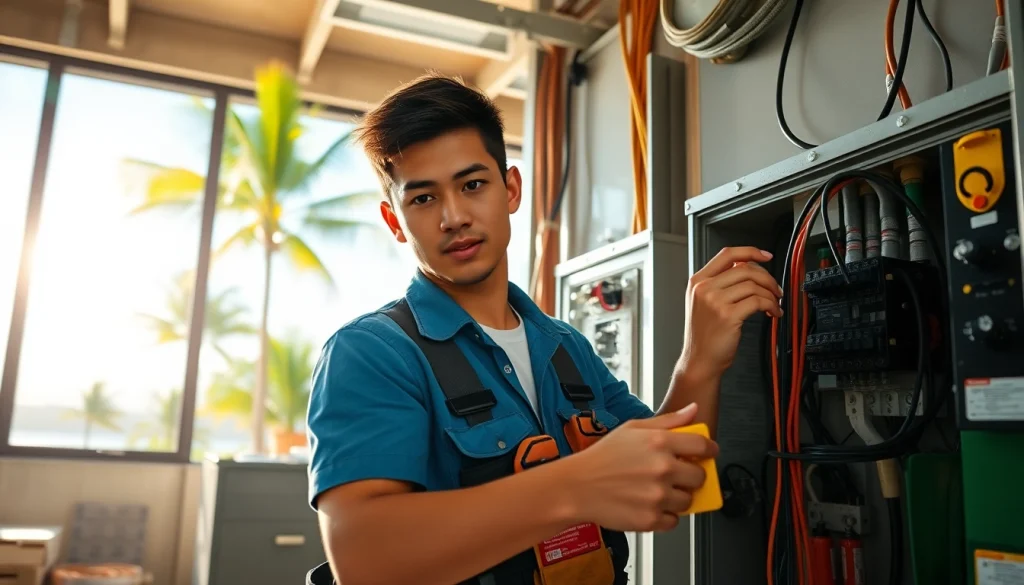
Understanding the Basics of Electrician Apprenticeship Hawaii
What is Electrician Apprenticeship Hawaii?
An electrician apprenticeship hawaii is a structured program that combines on-the-job training with classroom instruction to prepare aspiring electricians for a successful career in the electrical trade. These apprenticeships are designed to provide comprehensive education and hands-on experience in residential, commercial, and industrial electrical systems. Participants learn from experienced professionals while earning a wage, making it a practical approach to entering the field of electrical work.
Key Requirements to Begin Your Apprenticeship
Before embarking on an electrician apprenticeship in Hawaii, candidates must meet certain prerequisites. Generally, applicants should be at least 18 years old, possess a high school diploma or equivalent, and have a valid driver’s license. Additional requirements may include passing a drug test and background check, as well as demonstrating a basic understanding of math and science. Some programs may also prefer candidates with previous electrical training or experience, although it is not always mandatory.
Overview of Training Duration and Structure
The training duration for an electrician apprenticeship in Hawaii typically spans four to five years, consisting of both schooling and practical experience. Apprentices will usually combine approximately 8,000 hours of on-the-job training with around 500 to 1,000 hours of classroom instruction covering essential topics, including electrical theory, code compliance, and safety practices. Structured progressively, the program allows apprentices to advance their skills over time, leading to licensing and certification upon completion.
Finding Opportunities for Electrician Apprenticeship Hawaii
Local Programs and Training Providers
Identifying the right apprenticeship program is crucial for anyone looking to enter the field. In Hawaii, several organizations and training providers offer electrician apprenticeship programs. These can range from community colleges to trade unions, ensuring various learning environments that fit diverse needs. Exploring local options, such as the Joint Apprenticeship and Training Committee (JATC), can provide apprentices access to reputable training and job placement services.
How to Apply for an Apprenticeship?
The application process for an electrician apprenticeship varies by program but generally includes submitting an application form, attending an interview, and providing necessary documentation such as educational records and proof of age. Prospective apprentices should prepare for aptitude tests that may assess their math and reading skills, as well as physical exams. Being proactive in gathering information and understanding application deadlines will significantly enhance a candidate’s chances of securing a spot in the program.
The Importance of Networking in the Trade
Networking plays a vital role in the success of an electrician’s career. Engaging with professionals in the field can lead to valuable insights, job opportunities, and mentorships. Attending workshops, trade shows, and local industry events allows apprentices to connect with experienced electricians and industry leaders. Building these relationships not only builds a professional network but also enhances the apprentice’s knowledge and can aid in finding job opportunities after completion of their training.
Essential Skills for Electrician Apprenticeship Hawaii
Technical Skills Required for Success
To thrive in an electrician apprenticeship in Hawaii, candidates must develop a strong foundation in various technical skills. These include proficiency in reading blueprints and technical drawings, understanding electrical codes and regulations, and knowledge of wiring techniques. Additionally, apprentices should be comfortable working with various tools and equipment, such as multimeters, conduits, and circuit breakers, ensuring they can efficiently troubleshoot electrical issues.
Soft Skills to Develop During Your Training
While technical skills are essential, the significance of soft skills should not be overlooked. Effective communication, teamwork, and problem-solving abilities are crucial in the electrical field. Apprentices must learn to collaborate with colleagues and clients, convey complex information clearly, and adapt to changing circumstances and challenges. Cultivating these skills enhances workplace dynamics and can lead to better job performance and career advancement.
Safety Practices and Regulations in the Field
Adherence to safety practices and regulations is paramount in the electrical trade. Apprentices must familiarize themselves with the National Electrical Code (NEC) and state-specific regulations to ensure compliance. Regular training in safety protocols, such as proper handling of electrical tools, understanding personal protective equipment, and recognizing hazardous conditions, is vital. Developing a safety-first mindset not only protects the apprentice but also contributes to the overall safety of the job site.
Challenges in Electrician Apprenticeship Hawaii
Common Hurdles Faced by Apprentices
Like any training program, electrician apprenticeships come with their own set of challenges. Many apprentices struggle with the demands of balancing classroom learning while gaining hands-on experience in the field. Others may face difficulties in adjusting to the physical nature of the job or understanding complex electrical systems. It is essential to be aware of these hurdles and actively seek resources or support to navigate them effectively.
How to Overcome Obstacles During Training
Overcoming obstacles during training requires dedication and resourcefulness. For apprentices struggling with academic material, seeking extra help through tutoring or study groups can prove beneficial. Mentorship programs can provide guidance and support from experienced electricians, while open communication with instructors can clarify difficult concepts. Additionally, maintaining a positive attitude and focusing on personal progress can substantially improve resilience during challenging times.
Tips for Staying Motivated and Focused
Staying motivated throughout the duration of an apprenticeship can be challenging. Setting clear, achievable goals and monitoring progress can provide a sense of purpose. Celebrating small victories along the way reinforces motivation. Finding a mentor or a support group can also help foster accountability. Staying organized and prioritizing time effectively enables apprentices to manage work, school, and personal commitments, further enhancing focus and determination to succeed.
Career Prospects After Completing Electrician Apprenticeship Hawaii
Job Opportunities in the Hawaiian Electrical Industry
Upon completing an electrician apprenticeship in Hawaii, graduates will find a wealth of job opportunities available. The demand for skilled electricians in the state continues to rise, driven by ongoing construction projects and the need for electrical services in both residential and commercial sectors. Graduates can pursue various career paths, including residential electricians, commercial electricians, and specialized roles such as solar energy technicians or electrical inspectors, offering diverse options for career advancement.
Potential Salary and Advancement Paths
The financial rewards for completing an electrician apprenticeship are substantial. Entry-level electricians can expect to earn a competitive salary, which typically increases with experience and specialized skills. In Hawaii, the average salary for electricians often exceeds the national average, reflecting the demand for skilled tradespeople. As electricians progress through their careers, opportunities for advancement into supervisory or managerial roles become available, further enhancing earning potential.
Long-term Benefits of Completing Your Apprenticeship
Completing an electrician apprenticeship offers long-term benefits that extend far beyond immediate job placement. Graduates gain industry-recognized credentials that validate their skills and knowledge, making them highly employable. The hands-on experience gained during the apprenticeship also ensures they enter the workforce with confidence. Furthermore, many alumni build lasting professional networks and continue to benefit from ongoing learning and development opportunities, contributing to their overall career longevity and success.
Frequently Asked Questions
What is the duration of an electrician apprenticeship in Hawaii?
The duration of an electrician apprenticeship in Hawaii generally ranges from four to five years, which includes on-the-job training and classroom instruction.
Are there age requirements for the apprenticeship?
Yes, applicants typically need to be at least 18 years old to qualify for an electrician apprenticeship in Hawaii.
Do I need prior experience to apply for an apprenticeship?
Prior experience is not always required, but having some electrical knowledge or training can enhance your chances of acceptance.
How can I find apprenticeship programs in Hawaii?
You can find apprenticeship programs by researching local trade unions, community colleges, or electrical training providers that offer structured programs.
What are the potential earnings for electricians in Hawaii?
Electricians in Hawaii can earn a competitive salary, often exceeding the national average, with potential for further financial growth through experience and specialization.