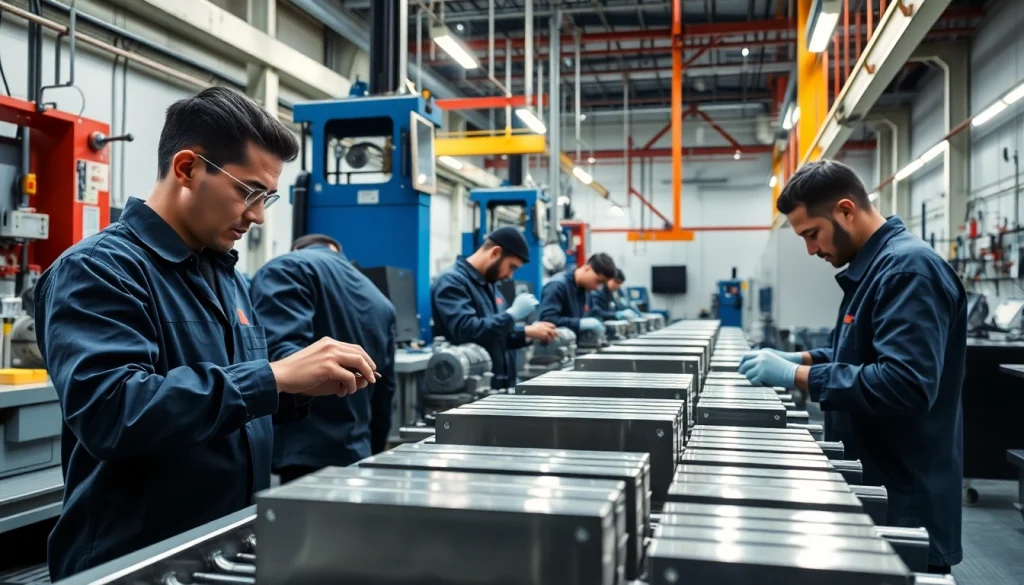
Understanding NdFeB Magnets
What Are NdFeB Magnets?
Neodymium Iron Boron (NdFeB) magnets are part of the rare-earth magnet family, boasting remarkable strength and versatility. These permanent magnets are composed primarily of neodymium (Nd), iron (Fe), and boron (B), and they were first developed in the mid-1980s. As a result of their unique properties, NdFeB magnets hold substantial importance across numerous industries, including automotive, electronics, and renewable energy. Given their exceptional magnetic strength, they can maintain large amounts of attractive force within a surprisingly small volume. This efficiency is a primary reason why businesses seek out reliable manufacturers, particularly those in China, the leading hub for NdFeB production. For businesses looking to explore high-quality manufacturing options, engaging with a renowned Ndfeb magnets manufacturer in china can yield significant advantages.
Key Properties and Applications
One of the standout features of NdFeB magnets is their high magnetic energy density, which is several times greater than that of traditional ferrite magnets. This property allows them to provide strong magnetic forces in a compact size, making them ideal for applications where space is a premium. Below are some key properties:
- High Magnetic Strength: NdFeB magnets can achieve magnetic flux densities exceeding 1.5 T (Tesla), which is notably powerful.
- Temperature Resistance: While they perform optimally at room temperature, specialized grades can maintain their magnetic properties at elevated temperatures.
- Corrosion Resistance: NdFeB magnets require protective coatings to prevent oxidation but can be engineered with various coatings based on application needs.
The applications for NdFeB magnets are extensive:
- Electric Motors: Widely used in electric and hybrid vehicles, enhancing performance and energy efficiency.
- Consumer Electronics: Found in devices such as smartphones, computers, and speakers, where compact and powerful magnets are essential.
- Medical Devices: Incorporated into imaging equipment and various therapeutic devices due to their strength and reliability.
Comparison with Other Magnet Types
When comparing NdFeB magnets to other types of magnets, such as ferrite and SmCo magnets, distinct differences emerge. Ferrite magnets are less expensive and more resistant to demagnetization but cannot match the strength of NdFeB magnets. On the other hand, Samarium Cobalt (SmCo) magnets offer similar strength but come at a higher cost and are generally more temperature resistant. Here’s a brief comparison:
| Property | NdFeB | Ferrite | SmCo |
|---|---|---|---|
| Magnetic Strength | High | Medium | High |
| Corrosion Resistance | Requires coating | Good | Good |
| Temperature Stability | Moderate | Good | Excellent |
| Cost | High | Low | Very high |
Given these attributes, businesses need to assess the most appropriate magnet type for their specific applications, based on cost, strength requirements, and environmental factors.
The Significance of Quality in Manufacturing
Why Quality Matters for NdFeB Magnets
The importance of quality in NdFeB magnets cannot be overstated. High-quality magnets boast longer lifespans, consistent performance under varying conditions, and reduced likelihood of losing magnetism over time. Inferior products can lead to premature failure in applications, resulting in increased costs and operational disruptions for businesses. Moreover, precision manufacturing translates to better integration within complex systems, enhancing overall product lifecycle and reliability.
Quality Control Standards in China
China has become a vital player in the NdFeB magnet industry, and its manufacturers adhere to stringent quality control measures governed by both local and international standards. Most reputable Chinese manufacturers implement quality control protocols that include:
- ISO Certification: Many factories pursue certifications that ensure adherence to quality management standards.
- Material Inspection: Rigorous testing of raw materials used in magnet production is essential.
- Process Monitoring: Continuous monitoring throughout various stages of manufacturing helps maintain quality consistency.
- Final Product Testing: Each batch undergoes extensive examination to verify that it meets both performance criteria and customer specifications.
Choosing a Reliable Manufacturer
Selecting a trustworthy manufacturer for NdFeB magnets is crucial for any business strategy that involves magnets. Key factors to consider include:
- Experience: Manufacturers with significant market experience tend to have streamlined processes and technical know-how.
- Custom Solutions: Look for manufacturers that can provide tailored solutions to meet your specific needs.
- Reputation: Research the manufacturer’s standing within the industry, looking for client testimonials and case studies.
- Support Services: Quality manufacturers offer support throughout the entire product lifecycle, from design consultancy to after-sales services.
Manufacturing Processes for NdFeB Magnets
Raw Materials and Sourcing
The primary materials in NdFeB magnets include neodymium, iron, and boron. Securing quality raw materials is vital to producing high-performance magnets. The sourcing must ensure:
- Purity: High-purity materials directly lead to improved magnetic properties.
- Reliability: Long-term partnerships with suppliers can ensure a stable supply of materials.
- Ethical Sourcing: Awareness and adherence to ethical sourcing practices are increasingly becoming industry standards.
Production Techniques and Innovations
The production of NdFeB magnets employs a range of sophisticated manufacturing techniques that include:
- Powder Metallurgy: This method compacts powdered raw materials and sinters them at high temperatures to create bulk magnets.
- Compression Bonding: A relatively new method that allows for a greater variety of magnet shapes and enhances mechanical strength.
- 3D Printing: Emerging technologies are utilizing 3D printing for magnet fabrication, which could revolutionize custom designs.
Continuous improvement in these manufacturing technologies is encouraging manufacturers to optimize production efficiency while maintaining quality.
Importance of R&D in Magnet Production
Research and Development (R&D) play an essential role in the NdFeB magnet industry, allowing manufacturers to innovate and refine their products. Key areas of focus within R&D include:
- New Alloys: Development of novel alloys can enhance performance and resistance to demagnetization.
- Coating Technologies: R&D efforts seek to develop better coatings that enhance corrosion resistance without compromising magnetic performance.
- Process Optimization: Constant advancements in production methodologies can yield efficiencies and cost savings.
Market Trends for NdFeB Magnets
Global Demand and Supply Analysis
The global demand for NdFeB magnets has been steadily increasing, driven by their expanding use in various sectors. The automotive industry, particularly, is a significant end-user, as electric vehicles increasingly rely on high-performance magnets for motor efficiency. This growing demand poses challenges regarding supply chain management, requiring a careful evaluation of capacity across manufacturers to prevent shortages and price fluctuations.
Emerging Industries Using NdFeB Magnets
In addition to traditional applications, NdFeB magnets are seeing increased usage in emergent sectors:
- Renewable Energy: Wind turbines and solar-powered devices are utilizing these magnets for energy capture and conversion.
- Medical Sector: Innovations in MRI machines and advanced diagnostic tools increasingly rely on the precision that NdFeB magnets offer.
- Aerospace: The need for lightweight yet powerful components has led to an increased application of NdFeB magnets in aircraft systems and satellite technology.
Future Projections for the Market
The future of the NdFeB magnets market is poised for growth as industries shift towards more energy-efficient products and technologies. Projections highlight:
- Increased R&D Investment: Companies are likely to prioritize R&D to develop next-generation magnets with better performance and environmental impact.
- Sustainable Practices: As corporate responsibility becomes paramount, manufacturers will adopt sustainable sourcing and production practices.
- Technological Advancements: Implementation of automation and smart technologies in manufacturing processes will drive efficiencies and further reduce costs.
Conclusion: Partnering with a Leading NdFeB Magnets Manufacturer in China
Evaluating Potential Partnerships
Selecting a partner in manufacturing NdFeB magnets entails careful consideration of potential suppliers’ capabilities, reliability, and adherence to quality standards. It’s vital to engage manufacturers that maintain a consistent track record and can provide detailed product certifications, showcasing their confidence in the quality of their products.
Benefits of Working with a Chinese Manufacturer
Collaborating with a Chinese manufacturer for NdFeB magnets presents numerous benefits:
- Cost Efficiency: Mass production capabilities can lead to relatively lower costs, making it a financially savvy option for businesses.
- Extensive Expertise: Many Chinese manufacturers possess vast experience in producing high-quality magnets, benefitting the supply chain.
- Innovative Practices: Competition within the Chinese market drives continuous innovation, ensuring access to advanced products.
Steps to Initiate Collaboration
To effectively initiate collaboration with a manufacturer, businesses should:
- Conduct Market Research: Identify potential manufacturers by examining their capabilities and track records.
- Engage in Dialogue: Open avenues of communication to express specific needs, allowing for tailored solutions.
- Request Samples: Before proceeding, request samples to assess quality and fit for your specific application.
- Negotiate Contracts: Ensure all terms, including quality standards, delivery timelines, and pricing, are documented clearly.